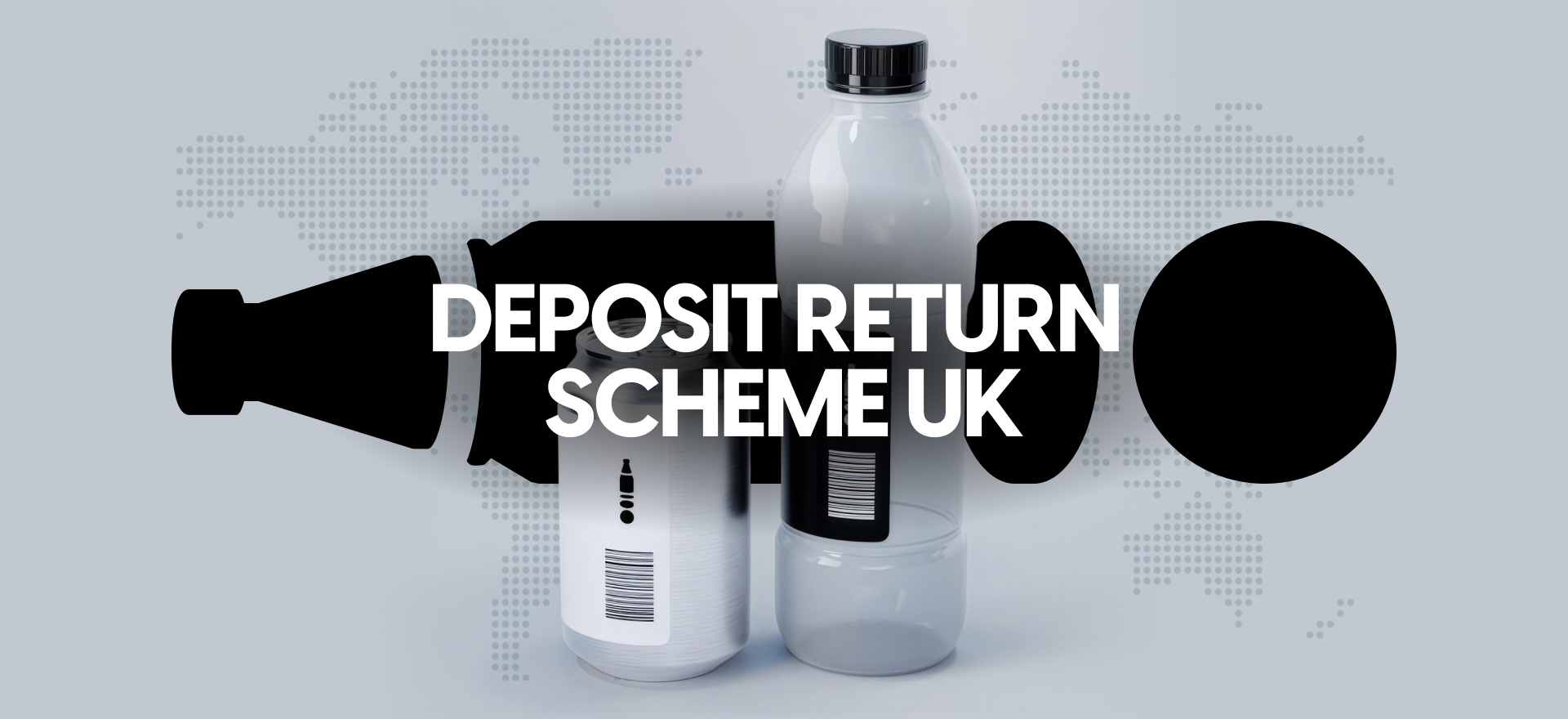
From 1st October 2027, drinks brands across the UK will need to comply with new rules for single-use plastic bottles and cans.
Under the UK Deposit Return Scheme (DRS), customers will pay a refundable 20p deposit on eligible drinks containers, which they can reclaim when they return them.
For brands that manufacture, import or sell drinks, DRS will affect everything from packaging and barcodes to registration, pricing and reporting. And with registration already open, there's plenty for businesses to get to grips with.
Here's what the Deposit Return Scheme means for your brand, which products are covered and what you need to do before October 2027.
What is the UK Deposit Return Scheme?
DRS is a recycling initiative encouraging consumers to return empty drinks containers rather than throw them away.
When someone buys a drink in an eligible plastic bottle or metal can, they'll pay an additional 20p. Once they've finished the drink, they can return the empty container to a designated return point and receive their deposit back. Different transitional arrangements apply to glass drinks containers in Wales.
The UK government estimates that around 30 billion single-use drinks containers are sold annually across England, Scotland and Northern Ireland, with approximately 6.5 billion going to waste. This scheme aims to increase collection rates and improve recycling.
Who will manage DRS?
DRS will be managed by Exchange for Change, the trading name of UK Deposit Management Organisation Ltd (UK DMO). This industry-led, not-for-profit organisation has been appointed to administer the scheme across all four UK nations.
Although there will be one administrator and registration system, the UK will operate three legally separate schemes covering England and Northern Ireland, Scotland, and Wales.
Does the Deposit Return Scheme affect my brand?
If your business manufactures, imports or sells drinks in eligible single-use containers, the Deposit Return Scheme is likely to affect you.
However, the obligations depend on what your business does and which products it handles.
Under DRS, a producer can be a brand owner, manufacturer or importer. Businesses that fill and seal drinks containers to order can also fall within the definition. For example, a food company selling snacks alongside its own canned drinks would need to comply with DRS for the drinks range.
Businesses in the Republic of Ireland supplying eligible drinks into Northern Ireland must also register for DRS.
Which drinks containers are included in the Deposit Return Scheme?
The UK Deposit Return Scheme covers single-use drinks containers made wholly or mainly from PET plastic, aluminum or steel, with capacities between 150 ml and three liters. Wales also includes certain glass drinks containers under separate transitional arrangements.
This includes many bottles and cans used for soft drinks, water, juice, beer, cider and ready-to-drink alcoholic beverages.
Containers included:
- Single-use PET plastic drinks bottles
- Aluminium drinks cans
- Steel drinks cans
- Eligible containers holding between 150ml and 3 litres
- Glass drinks bottles (Wales only)
A bottle with a lid made from a different material can still qualify if the container itself meets the scheme's requirements.
Containers excluded:
- Glass bottles in England, Scotland and Northern Ireland (Wales has a different arrangement)
- High-density polyethylene (HDPE) bottles, including common milk bottles
- Refillable drinks containers
- Liquid medicines, such as cough syrups
- Flavouring syrups, such as coffee syrups, that are intended to flavour or sweeten drinks rather than be diluted to make a drink.
The 20p deposit applies to each eligible container, regardless of size. A six-pack of cans, for example, will carry a total refundable deposit of £1.20.
When does the Deposit Return Scheme start?
The official launch date is 1 October 2027, although several registration and preparation stages take place beforehand. Here's the current DRS timeline:
Phase 1 registration is already available through the Exchange for Change registration portal.
Phase 2 will collect additional information specific to each business's role. Its closing date has not yet been published.
What do drinks producers need to do before October 2027?
Drinks producers have several responsibilities under the new scheme, and some will require changes to your existing packaging and administrative processes.
1. Register with Exchange for Change
Businesses classed as producers must register with Exchange for Change.
Phase 1 opened in September 2026 and collects basic company information. Phase 2, scheduled for January 2027, will request further details relevant to the business.
Registration requirements also apply to eligible low-volume producers, even where exemptions from deposits and fees are available.
2. Prepare for the 20p deposit
Producers will need to account for the 20p deposit on containers subject to the deposit requirement and pay the corresponding amounts to Exchange for Change. This means reviewing how deposits are recorded and passed through the supply chain.
Businesses throughout the supply chain, including wholesalers and retailers, must also charge the deposit when selling eligible filled drinks containers.
Make sure to check whether your pricing systems, invoices and electronic data interchange (EDI) arrangements can accommodate the deposit separately from the product price.
3. Update packaging labels and barcodes
Eligible drinks containers will need the official DRS logo and a barcode registered with Exchange for Change, unless an exemption applies. Existing barcodes, including international barcodes, must be reviewed against the scheme's requirements. International barcodes may still be accepted, although their use could incur an additional charge. For brands selling the same products in several markets, this could mean reviewing your packaging artwork and print specifications.
Drinks containers displaying the new DRS logo and scheme-registered barcode must not be sold to consumers before 1st October 2027. However, these products can enter the supply chain beforehand, provided they are not sold to consumers before the scheme launches. Packaging suppliers should therefore be involved in preparations well ahead of launch, particularly where artwork changes coincide with existing production schedules.
4. Report container volumes
Producers must report the quantities of eligible containers they place on the market. Your business should identify which product lines are covered and establish how those volumes will be recorded.
5. Understand producer fees
Exchange for Change has confirmed that per-container producer fees will be 0p from October 2027 until December 2028. From January 2029, the anticipated fees are:
- 0.6p per aluminium or steel container
- 2.3p per PET plastic container
These rates remain provisional and are due to be reconfirmed in May 2027. Per-container fees are separate from any applicable producer registration charges.
“One of the biggest challenges for drinks brands will be managing the changeover to DRS-compliant packaging. With new barcode requirements and proposed restrictions on using existing packaging after launch, businesses need to look carefully at their stock levels and upcoming print orders. Getting those decisions wrong could leave brands with packaging they can no longer use.”
Dave Hoogakker, Director, Hooley Brown
Are small drinks brands exempt from the Deposit Return Scheme?
Certain drinks producers may qualify for low-volume exemptions, although registration and reporting responsibilities still apply. In England and Northern Ireland, individual product lines with up to 5,000 containers per scheme year may qualify. For the first 15-month scheme year, from October 2027 to December 2028, this threshold increases to 6,250 containers.
Qualifying product lines are exempt from the 20p deposit, producer fees and certain DRS labelling and barcode requirements.
Importantly, eligibility is assessed by individual product line rather than the overall size of the business. A producer could therefore have some drinks subject to the standard DRS requirements, while others qualify for the low-volume exemption. Businesses selling across multiple UK nations should check the applicable national rules.
What happens to existing drinks stock and packaging?
Brands holding finished drinks or unused packaging when DRS begins will need to consider the transitional arrangements.
Under the published arrangements for England, Northern Ireland and Scotland, drinks filled before 1st October 2027 can continue to be sold outside the scheme after launch. Exchange for Change encourages businesses to sell through this stock by April 2028, although this is not a legal deadline.
Unused packaging presents a different challenge. Packaging that does not meet the new DRS requirements will generally need to be updated before it can be used for drinks filled after launch. Exchange for Change is discussing possible exceptions for packaging linked to orders placed before 1st October 2027, although these have not yet been agreed with regulators.
Businesses should therefore review existing packaging stock and upcoming orders carefully to avoid unnecessary costs or packaging waste.
How does DRS differ across England, Scotland, Wales and Northern Ireland?
The Deposit Return Scheme will begin across all four nations on 1st October 2027, but certain requirements differ.
Wales's inclusion of glass is particularly important for brands selling bottled drinks across the UK. Although Welsh glass containers are included from the outset, the deposit remains at 0p until 1st October 2031.
Exchange for Change was appointed to administer the Welsh scheme in August 2026, meaning businesses can use the same administrator across the UK.
What does the Deposit Return Scheme mean for retailers?
Retailers selling eligible drinks also have responsibilities under DRS. Supermarkets, convenience stores, grocers and newsagents will need to provide a return point unless an exemption applies. For example, retailers operating from premises smaller than 100 m² in urban areas are automatically exempt from providing a return point. Other retailers may qualify for exemptions, subject to approval.
Retailers subject to the scheme must also meet applicable registration requirements, charge the 20p deposit when selling eligible drinks and refund customers who return containers. Return-point operators must make arrangements for storing returned containers and displaying the required scheme information.
Returns can be handled manually or through a reverse vending machine (RVM), which accepts empty containers. Under the published arrangements for England, Scotland and Northern Ireland, retailers operating manual return points will receive a handling fee of 3p per container. Reverse vending machines have a separate tiered fee arrangement.
Businesses selling own-label drinks may also have producer responsibilities alongside retailer obligations.
Your Deposit Return Scheme preparation checklist
With October 2027 approaching, your drinks brands can start working through the following actions:
- Complete Phase 1 registration with Exchange for Change and prepare for Phase 2 in January 2027.
- Identify affected product lines, recording container material, capacity and the UK nations where each product is sold.
- Check low-volume eligibility for individual product lines, using the applicable national rules.
- Contact packaging suppliers to confirm container specifications and discuss upcoming artwork requirements.
- Plan barcode and logo changes, allowing for existing packaging orders and production schedules.
- Review existing stock and unused packaging against the provisional transition arrangements.
- Check pricing, invoicing and EDI systems to ensure they can account for the 20p deposit on each eligible container.
- Check the applicable VAT treatment of DRS deposits, including HMRC's guidance on deposits that are not refunded to consumers.
- Review existing packaging EPR reporting obligations to understand how DRS will affect the treatment of eligible drinks containers.
Get your packaging ready for DRS 2027
With the October 2027 deadline approaching, now is a good time to review your packaging, check your compliance requirements and plan any necessary changes. Getting started early can help avoid costly packaging waste and last-minute production issues.
At Hooley Brown, we help brands understand packaging obligations and prepare for changing regulations. Whether you need advice on DRS requirements, labelling or packaging compliance, our team is here to help.
Book a free call with our Directors to discuss how we can support your brand.
Deposit Return Scheme FAQs
When does the UK Deposit Return Scheme start?
The UK Deposit Return Scheme launches on 1st October 2027 across England, Scotland, Wales and Northern Ireland. Producer registration began in September 2026, with a second registration phase scheduled to open in January 2027. Businesses should complete the relevant registration stages before the scheme begins.
How much is the DRS deposit?
The deposit is 20p for every eligible PET plastic or metal drinks container, regardless of its capacity. Customers pay the deposit when purchasing a drink and receive it back when they return the empty container through the scheme. A multipack of six eligible cans carries £1.20 in refundable deposits. Glass drinks containers in Wales are initially subject to a 0p deposit until 1st October 2031.
Is glass included in the Deposit Return Scheme?
Glass is excluded from DRS in England, Scotland and Northern Ireland. Wales includes glass from 1st October 2027, although the deposit will initially be 0p, with no DRS labelling requirement until October 2031. Businesses selling glass-bottled drinks in Wales should follow the Welsh arrangements.
Who runs the UK Deposit Return Scheme?
Exchange for Change, the trading name of UK Deposit Management Organisation Ltd, administers the scheme across all four UK nations. It is a not-for-profit, industry-led organisation responsible for the scheme's administration, including producer registration. The UK has three separate legal schemes operating through this shared administrator.
Do small drinks brands have to take part?
Yes, certain low-volume product lines may qualify for exemptions, but registration and reporting obligations still apply. In England and Northern Ireland, individual product lines with up to 5,000 containers per scheme year may qualify, increasing to 6,250 containers for the first 15-month scheme period (October 2027 to December 2028). Qualifying product lines are exempt from deposits, producer fees and certain labelling requirements. Businesses should check the applicable rules in each UK nation.
Can I sell drinks manufactured before October 2027?
Under provisional transition arrangements for England, Northern Ireland and Scotland, drinks filled before 1 October 2027 can still be sold after launch. Exchange for Change encourages businesses to sell through these products by April 2028, although this is not a legal deadline. Welsh transition guidance is still to follow.
The treatment of unused pre-DRS packaging is subject to further guidance, including possible exceptions for packaging ordered before launch.
What's the difference between DRS and packaging EPR?
DRS applies to specified single-use drinks containers and uses refundable deposits to encourage returns. Extended Producer Responsibility applies more widely to packaging and can involve waste disposal fees, reporting and recycling obligations. Drink containers covered by DRS are generally excluded from packaging EPR waste disposal fees, although businesses may still have other EPR responsibilities. Glass packaging remains subject to separate considerations, particularly in Wales, where glass is included in DRS.
Read our Extended Producer Responsibility guide for more information.
This article was published in November 2026. Regulations, standards and enforcement guidance can change. Requirements and provisional arrangements should be checked against the latest official guidance.